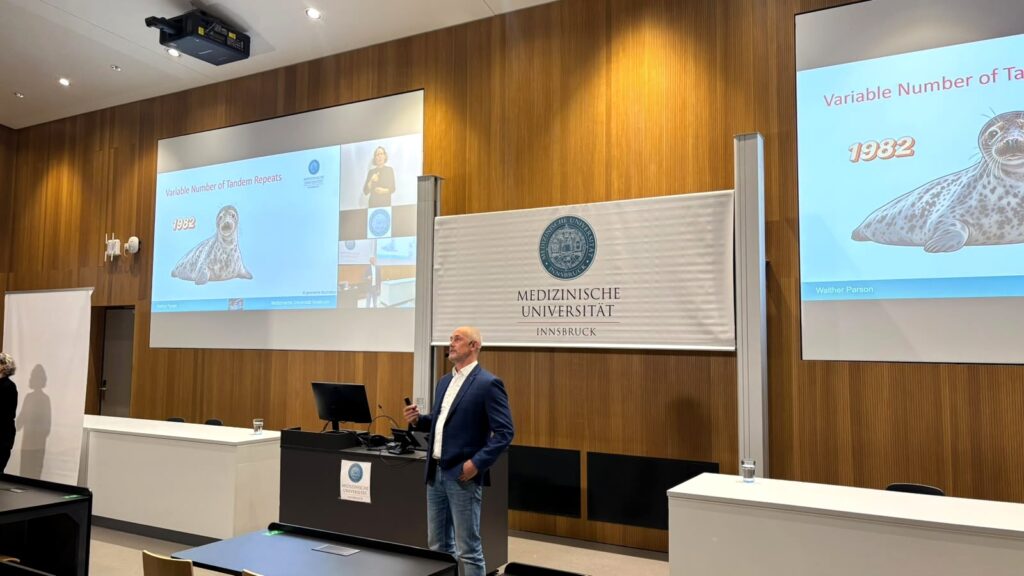
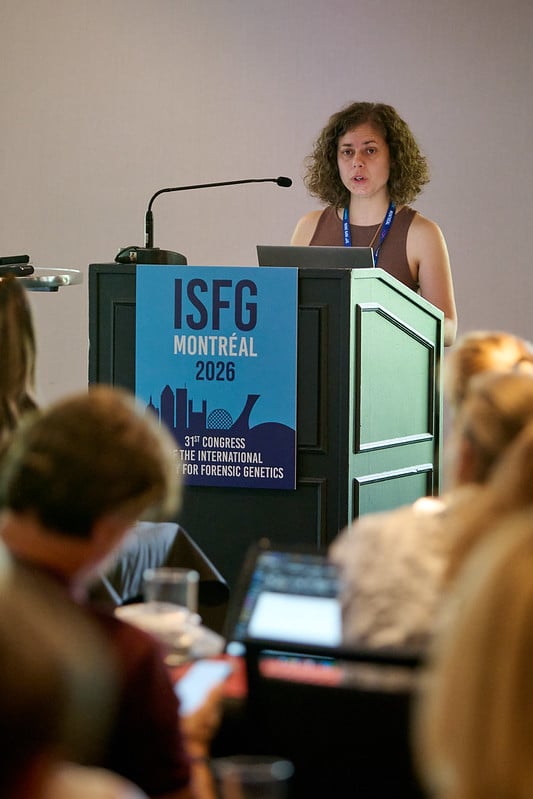
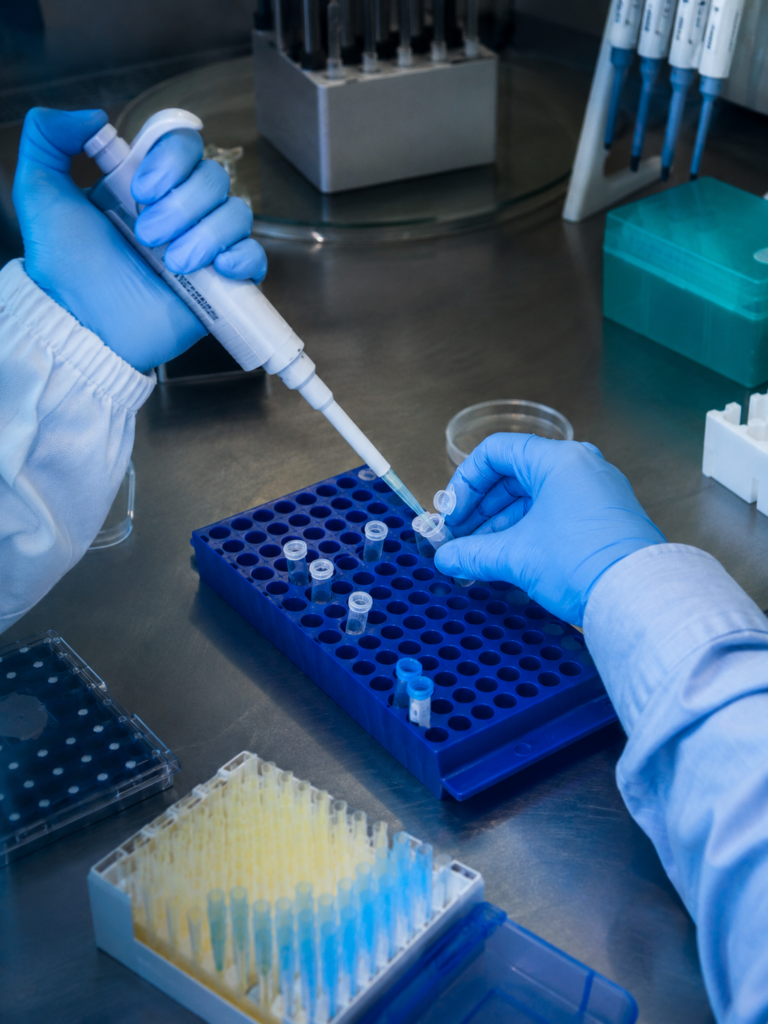
Picture a red stain on a kitchen floor. Is it blood, or spilled ketchup? At a public lecture at the Medical University of Innsbruck in November 2026, ForMAT researcher Charlotte Sutter used this everyday example. She wanted to show how forensic scientists work out what a biological stain is. Then someone in the audience raised a sharp point. Tomatoes have DNA too. So, could a forensic DNA test confuse the two?
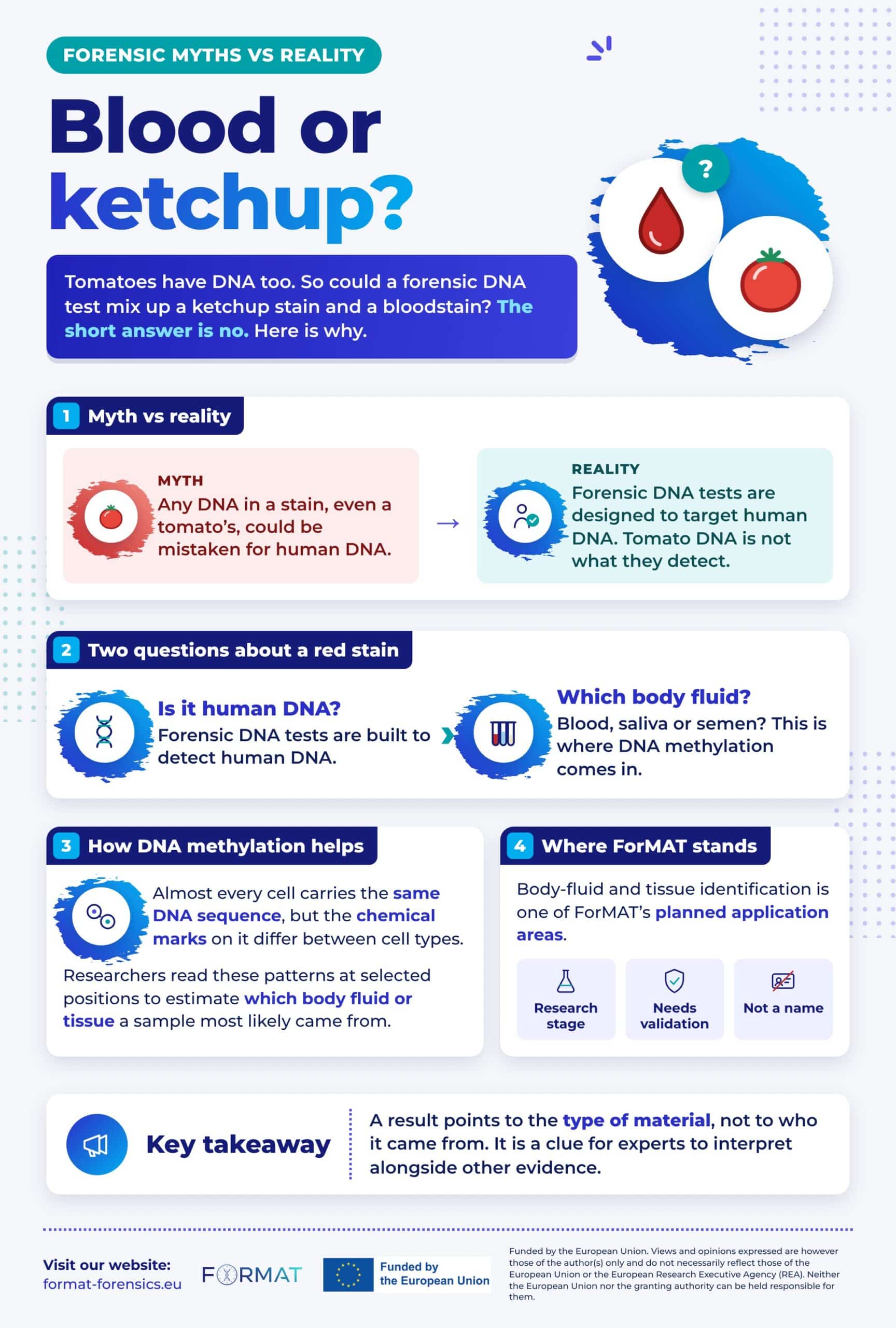
The short answer is no. However, the longer answer is a great way to understand how forensic DNA analysis works. It also explains what DNA methylation is and why ForMAT is researching it. You do not need any background in biology to follow along.
First, what is DNA?
DNA is the molecule that carries the instructions for building and running a living thing. It is made of four chemical building blocks, usually written as the letters A, C, G and T. These letters form a very long sequence. What matters is their order, in the same way that the order of letters in a book turns them into words and sentences.
Every living thing has DNA, including people, animals, plants, fungi and bacteria. That also includes the tomatoes in ketchup. So the person in the audience was right to wonder. A ketchup stain can contain DNA, just not human DNA.
How forensic DNA tests find human DNA
Forensic DNA analysis does not read all the DNA in a sample at once. Instead, the tests look for particular short stretches of DNA whose sequence is typical of humans. Think of it like searching a huge library for one specific sentence that only appears in one kind of book. Books on other shelves may be full of words. Yet they do not contain that sentence, so the search simply does not pick them up.
As Charlotte explained to the audience, forensic analyses target human-specific DNA. The DNA of a tomato has a very different sequence, so the test does not detect it. As a result, a ketchup stain would not be mistaken for a human sample. In fact, the question shows the kind of thinking forensic scientists apply to their own methods every day. What else might be in this sample, and could it get in the way?
The second question: which body fluid is it?
Knowing that a stain contains human DNA is only part of the story. It can also matter what kind of biological material it is. For example, a drop of blood, a trace of saliva and a stain of semen can point to quite different events. The type of material can therefore help experts understand what may have happened. Scientists call this task body-fluid identification, or more broadly tissue identification.
However, a standard DNA profile cannot answer this question. The DNA sequence in a person’s blood is essentially the same as the DNA sequence in their saliva. For this reason, the profile looks the same whichever fluid it came from. Forensic laboratories already have other tests that help with some body fluids. In addition, researchers are exploring whether a different kind of information, DNA methylation, could add to them.
What DNA methylation is
Here is a small puzzle. Almost every cell in your body carries the same DNA sequence. Yet a blood cell and a cell lining your mouth look and behave very differently. So how can the same instructions produce such different cells?
Part of the answer lies in chemical marks that sit on top of the DNA without changing its letters. The best studied of these marks is DNA methylation. It is a tiny chemical tag, called a methyl group, that sits at particular spots in the DNA known as CpG sites. Methylation helps control which genes a cell switches on and which it switches off.
A cookbook is a helpful way to picture it. Imagine every cell in your body holds an identical copy of the same cookbook. A blood cell and a mouth cell own exactly the same book. However, each one has stuck sticky notes on different pages, marking which recipes to use and which to skip. In other words, the recipes are the DNA sequence, and they stay the same. The sticky notes are the methylation, and they differ. Moreover, the pattern of sticky notes is typical for each type of cell.
From a pattern to a prediction
Because methylation patterns differ between cell types, they can offer a clue about where a sample came from. First, researchers measure how much methylation is present at a carefully selected set of positions in the DNA. Then they compare that pattern with what is known about blood, saliva, semen and other body fluids and tissues. Finally, a prediction model uses these measurements to estimate which source the sample most likely comes from.
Two words in that sentence matter a lot: estimate and most likely. The result is a statistical prediction, not a certainty. Experts therefore have to interpret it alongside everything else they know. Methylation is also behind other research questions, such as estimating a person’s age from their DNA. We explain this in ForMAT Explains: 5 Terms in Forensic Epigenetics.
Where ForMAT fits in
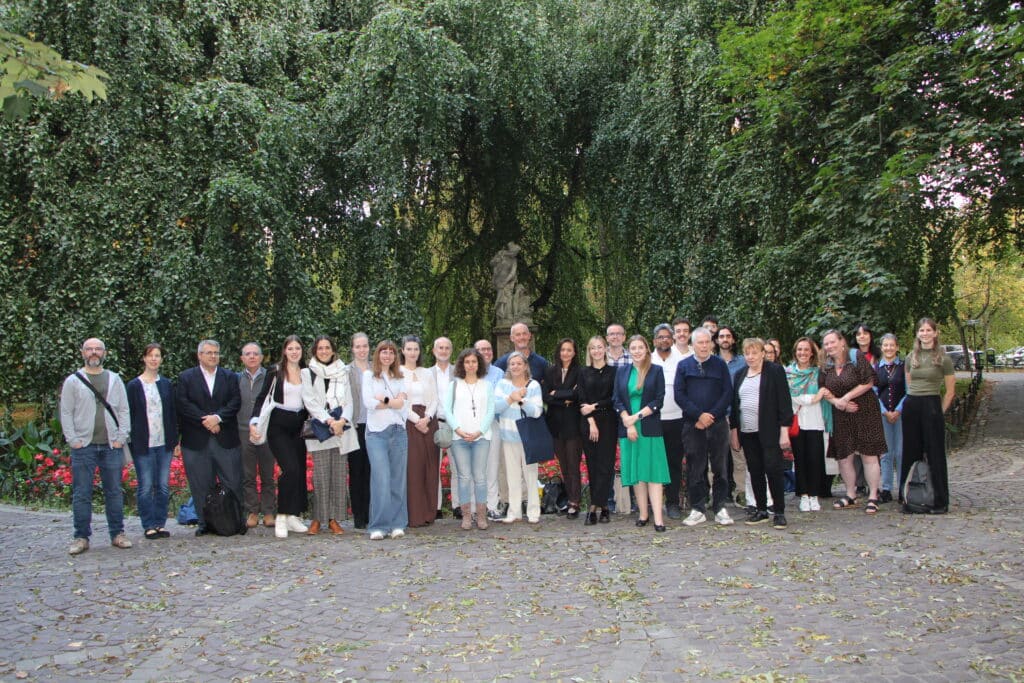
ForMAT, short for Forensic Methylation Analysis Toolsets, is a Horizon Europe research project. Body-fluid and tissue identification is one of its planned application areas, alongside forensic age estimation and disaster victim identification. The Consortium is researching how tools based on DNA methylation could support forensic work in these areas.
This is research in progress. Before experts can consider any new method for casework, they have to validate it. That means testing it carefully to show how well it works, on which kinds of samples, and where its limits lie. The path from a promising research result to a tool used in practice also includes ethical and legal checks. We described these steps in Justice and Compliance: What Has to Happen Before Any New Forensic Tool Reaches Practice.
What a result can and cannot tell you
It is worth being clear about what body-fluid identification is, and what it is not. A result points to the type of biological material in a sample. However, it does not tell you who the sample came from. On its own, it also does not explain how or when a stain ended up where someone found it. Above all, it does not replace the professional judgement of forensic scientists, who weigh every result alongside the other evidence.
Back to the kitchen floor
So, blood or ketchup? A forensic DNA test would not confuse the two, because it looks for human DNA. Tomato DNA is simply not what it is searching for. The more interesting question starts once the test finds human DNA: what kind of material is it? That is where research on DNA methylation, including ForMAT’s, may one day add a useful piece of the puzzle.
Questions like this one are a big part of why ForMAT takes its research to public audiences. You can read about the evening in ForMAT at a Public Lecture in Innsbruck: DNA Without Names. To follow the project, visit our news page or join us on LinkedIn. Is there a forensic question you have always wondered about? Send it to us through our contact page.