When a biological trace is found at a crime scene, DNA profiling is usually the first tool investigators reach for. It’s fast and well-established. But there’s a catch that rarely makes it into TV dramas: a DNA profile is only useful if there’s something to compare it to.
What forensic labs can determine today
Standard forensic DNA profiling doesn’t read a person’s entire genetic sequence. It examines a small set of highly variable markers, known as short tandem repeats, chosen because they’re extremely good at telling individuals apart, not because they reveal broad biological information about someone. When investigators compare these markers to a reference, such as a known suspect, a relative, or a database entry, the process works well. The more precise problem isn’t that profiling fails. It’s that a technically valid profile can still produce no match if there’s no suitable reference to compare it against. That’s the gap forensic labs face when no match exists.
Where the gap appears
Cold cases
Investigators sometimes have a genetic profile from a crime scene, but no match in any database and no suspect to compare it to. Without new leads, these cases can stay unresolved for years, even when biological evidence exists. In situations like these, a valid DNA profile still represents a real investigative asset — it simply lacks the reference point needed to turn into a match.
Disaster victim identification
After a mass-casualty event, forensic teams work to identify human remains, often by comparing DNA with family members. When large numbers of remains need processing at once, identification becomes far harder. International standards such as the INTERPOL Disaster Victim Identification Guide coordinate this process, but the underlying challenge remains. In this context, an estimated age range would typically support identification as one input among several, alongside dental records, fingerprints, or kinship analysis, rather than provide identification on its own.
Asylum claimants
Undocumented minors that arrive to the European borders claiming asylum face conventional invasive methodologies such as X-radiation to infer their chronological age. These methods have drawn sustained criticism from medical and human-rights organisations, which point to both their invasiveness. (See our glossary of forensic epigenetics terms for the vocabulary behind this field.)
Why this matters — for individuals and families
An unresolved case can mean an offender is never identified, a victim remains unnamed, or a family is left without a reliable account of what happened. These are the human stakes behind a fairly dry-sounding technical gap.
Why this matters — for policymakers
When forensic methods differ from one country’s laboratory to another, cross-border cases become harder to coordinate. This is a real issue where investigations and disaster responses often span multiple EU member states. Closing this gap involves standardisation across institutions and oversight of how institutions validate new methods, not just laboratory science. That’s a central reason any new forensic method needs formal validation, not just promising results in a single lab.
What ForMAT’s research is, and isn’t, exploring
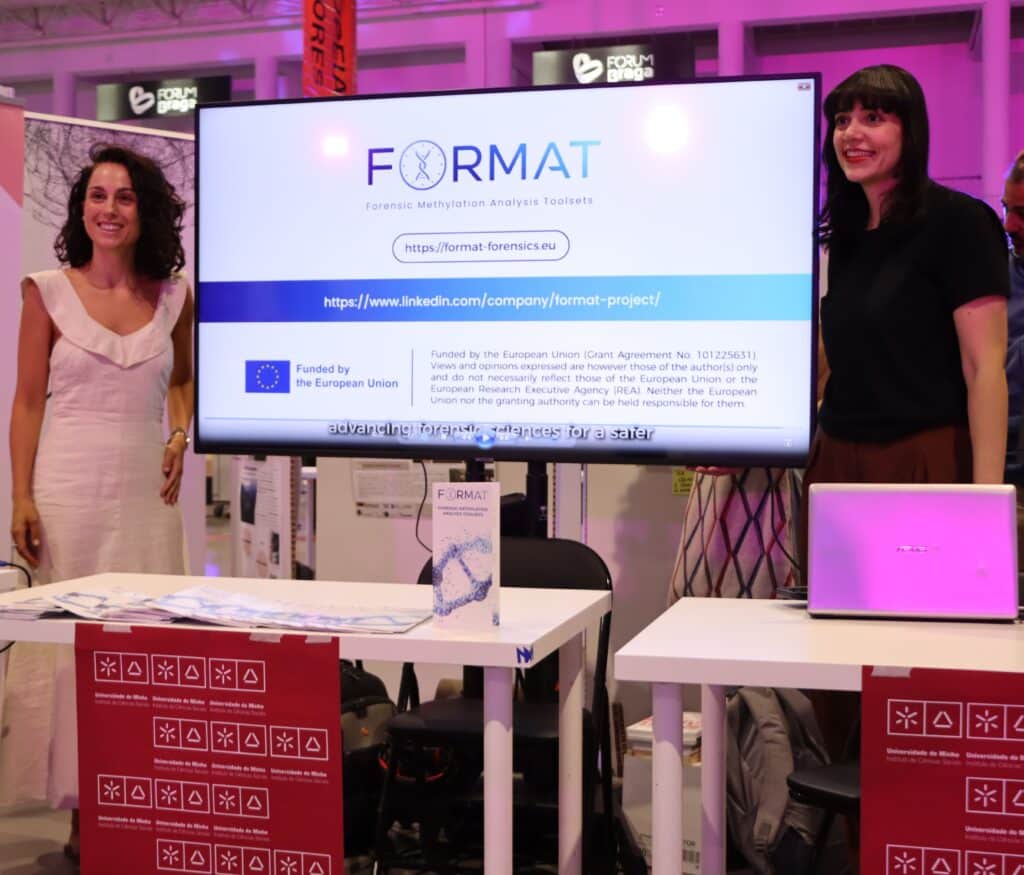
ForMAT’s research focuses on specific, defined questions: estimating a likely age range for a biological sample’s donor, and identifying the type of biological material a trace contains. It does not aim to reconstruct a person’s identity, appearance, or a comprehensive personal genetic profile. Any result would come with a margin of error, not a precise figure, and would function as one investigative lead among several, never a standalone identification.
ForMAT’s DNA methylation-based kits are still at a research and development stage, not a finished product. Any future use in real casework would depend on rigorous validation and compliance with relevant forensic, ethical and legal standards. This includes frameworks such as ISO/IEC 17025, which accredits a laboratory’s overall competence and quality systems, though accreditation alone doesn’t establish that a specific new method is legally admissible or ready for operational use. That distinction is part of why cross-lab validation matters before any wider adoption.
A gap, not a shortfall in the science
DNA profiling remains one of the most reliable identification tools available. The gap only appears where no comparison sample exists. That’s precisely where new, complementary research becomes valuable, not because existing science has failed.
What’s next
Our upcoming “Justice and Compliance” post looks at the safeguards needed before any new forensic tool reaches practice, including what legal authority would be required, how uncertainty should be reported to decision-makers, and what happens to data that’s collected along the way. In the meantime, explore ForMAT’s approach on our home page.
Frequently asked questions
Why can’t investigators just run every crime-scene DNA sample through a database?
They can, but a database search only works if the person’s profile is already in that database. If the trace’s donor was never entered (for example, no prior conviction requiring it, or they’re in a different country’s system), the search returns no match, no matter how good the sample is. The gap isn’t the search itself; it’s the absence of something to find.
What’s the difference between a cold case and a case with no leads at all?
A cold case typically already has a DNA profile from the crime scene. The profile just has nothing to compare it to: no suspect, no matching relative, no database hit. It’s not that evidence is missing; it’s that a valid profile alone doesn’t reveal an identity without a reference point.
How is disaster victim identification different from a criminal investigation?
The goal is different. In disaster victim identification, forensic teams are working to identify human remains, often for grieving families, not to build a criminal case. It typically combines DNA with dental records, fingerprints, and kinship analysis rather than relying on any single method alone.
Does “the gap” mean DNA profiling doesn’t work well?
No. DNA profiling remains one of the most reliable forensic tools available when there’s a suitable reference to compare against. The gap only shows up in the specific situations where no such reference exists, which is a different problem from the method being unreliable.
What does ForMAT’s research actually aim to add?
Two specific things: an estimated likely age range for a sample’s donor, and information about what type of biological material a trace contains (for example, blood, saliva, or semen). Neither reveals someone’s identity or appearance. Both would function as one investigative lead among several, not a replacement for existing methods.
Is ForMAT’s technology used by police or in real cases today?
No. It’s still at a research and development stage. Any future operational use would depend on formal validation, laboratory accreditation, ethical and legal approval, processes carried out by independent bodies, not by the research project itself.
Why does it matter if forensic methods differ between EU countries?
Investigations and disaster responses often cross borders. If laboratories in different countries use different, unvalidated methods, comparing or combining their results becomes harder, which is part of why standardisation and independent validation matter as much as the underlying science.