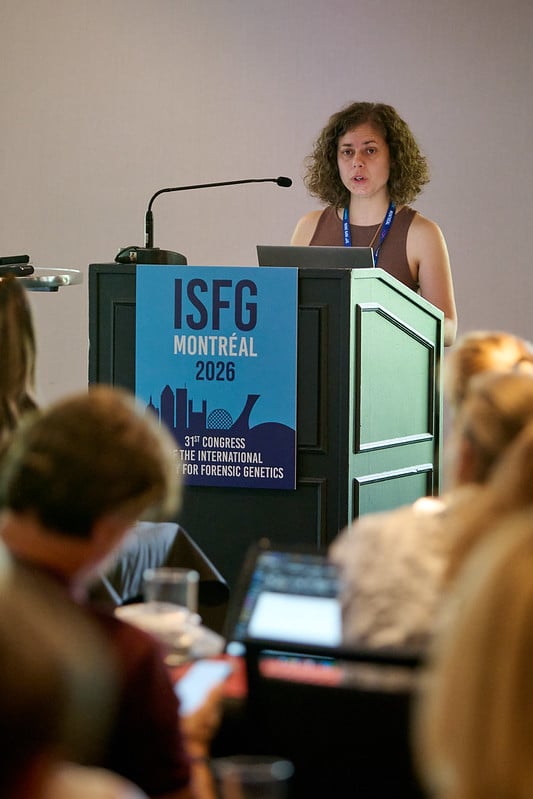
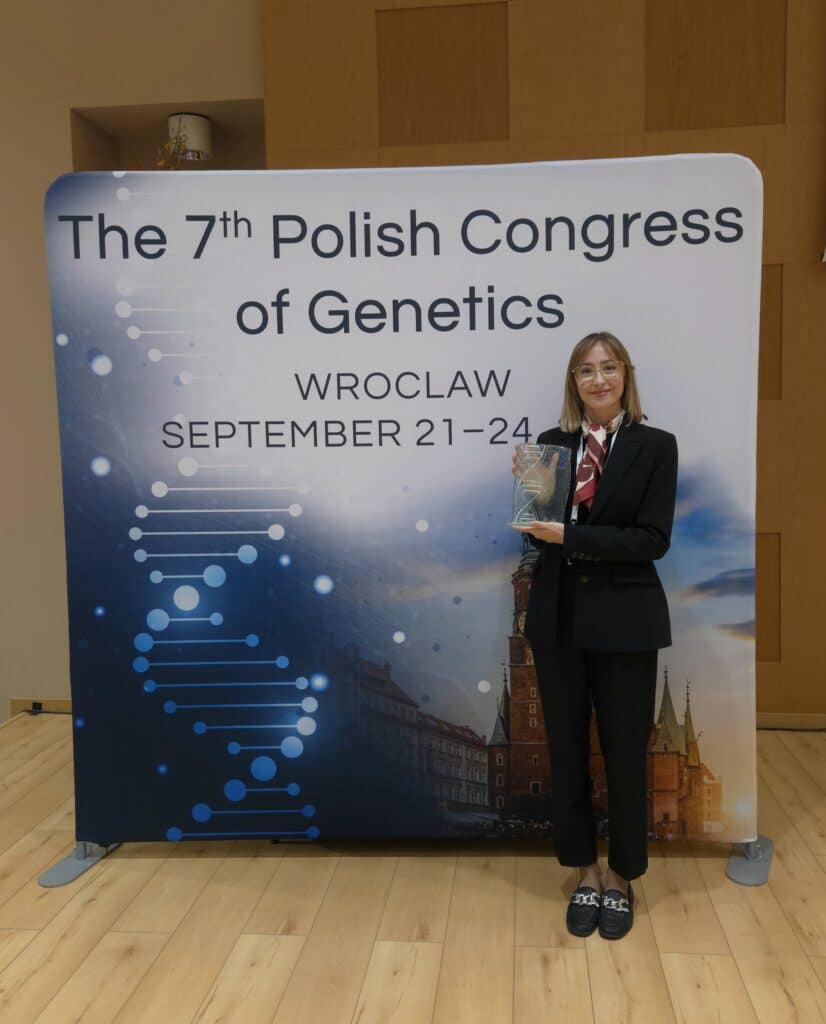
From 21 to 24 September 2026, ForMAT researchers took part in the 7th Polish Congress of Genetics in Wrocław, Poland. The Polish Genetic Society and the Polish Society of Human Genetics organised the Congress. It brings together researchers working across many areas of genetics, including a dedicated forensic genetics session. For ForMAT, it was a chance to share three different strands of the project’s research with the Polish genetics community. One of those presentations came home with an award.
An award for young researchers in forensic genetics
Kamila Marszałek (Department of Genomics and Forensic Genetics of the Pomeranian Medical University in Szczecin, PMU) received the Złoty Paragraf (Golden Paragraph). It is the first prize for the best oral presentation in forensic genetics. The award supports young scientists in the field.
Her presentation focused on a question at the heart of ForMAT’s work on disaster victim identification (DVI). What can DNA methylation in bone and cartilage tell forensic experts when they work to identify human remains? Kamila presented preliminary ForMAT findings. They suggest that a small, carefully selected set of methylation markers may provide several kinds of information at once. These include distinguishing bone from cartilage, telling different skeletal elements apart, and estimating age.
These results are part of ongoing research and will need further validation. They also reflect something important about how the project approaches forensic epigenetics. The aim is to give experts additional biological clues that they interpret carefully, alongside other evidence.
Tracing age and lifestyle through epigenetics
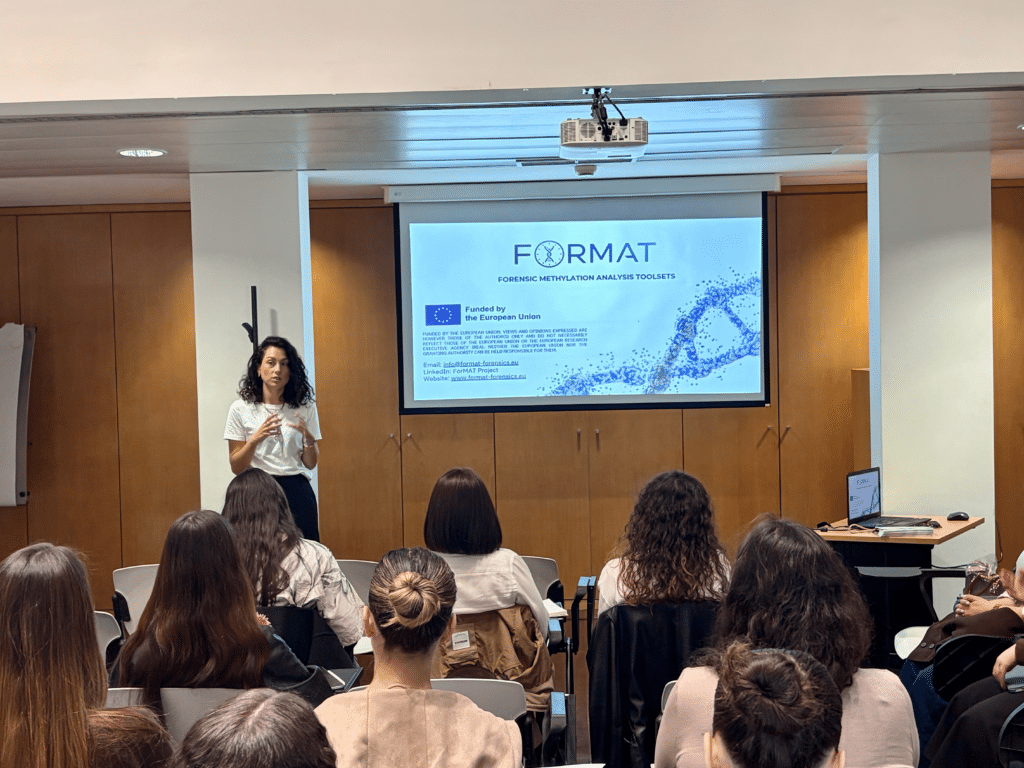
Ewelina Pośpiech (PMU) was invited to give a keynote lecture titled “Tracing age and lifestyle through epigenetics: new frontiers in forensic genetics and public health.”
As part of the lecture, she presented recent ForMAT work on how DNA methylation could reflect lifestyle-related factors, such as alcohol consumption and body mass index (BMI). Lifestyle inference is one of the project’s planned research areas. It is also one that calls for particular care. This research is at an early stage, and any future forensic use would depend on validation, careful interpretation and appropriate safeguards.
Estimating age from semen with ForSpEC
Aleksandra Pisarek-Pacek (JU) presented ForSpEC, a prediction model for estimating age from DNA methylation in semen, together with results from its validation.
Semen is one of the biological sources forensic laboratories may work with. Research like this is part of ForMAT’s wider effort to understand how epigenetic age estimation can be adapted to different types of samples.
Why national meetings matter
International congresses such as ISFG put ForMAT in front of the global forensic genetics community. National meetings play a different role. They connect the project with researchers, students and practitioners closer to home, many of whom work outside forensic science altogether. Wrocław gave the team a chance to explain ForMAT to a broad audience of geneticists and to hear how colleagues from other fields see the work.
Congratulations to Kamila, and thank you to Ewelina and Aleksandra for representing the project.