On 27 March 2026, the Institute of Social Sciences at the University of Minho (ICS UMinho) hosted an Open Class. The goal was clear: to bring a documentary into an academic setting and connect the social realities of criminal justice with the scientific questions that ForMAT is working to answer.
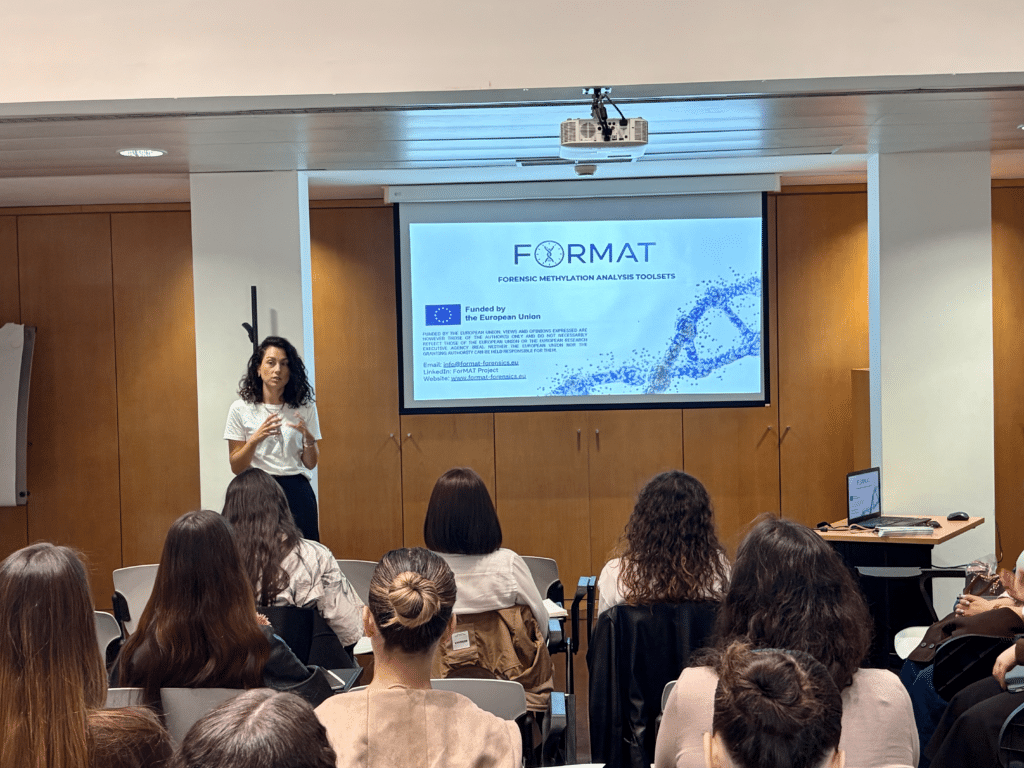
Researchers Rafaela Granja and Alessandra Nardini from the Communication and Society Research Centre (CECS) organised the session. It ran from 9 to 11 AM in the Sala de Atos and brought together students enrolled in the Master’s in Crime, Difference and Inequality. The format was straightforward but powerful — a screening of Ava DuVernay’s documentary 13th, followed by an open discussion.
Why 13th?
13th critically discusses the carceral sphere in the United States. In doing so, it foregrounds how legal systems interact with structural inequality.
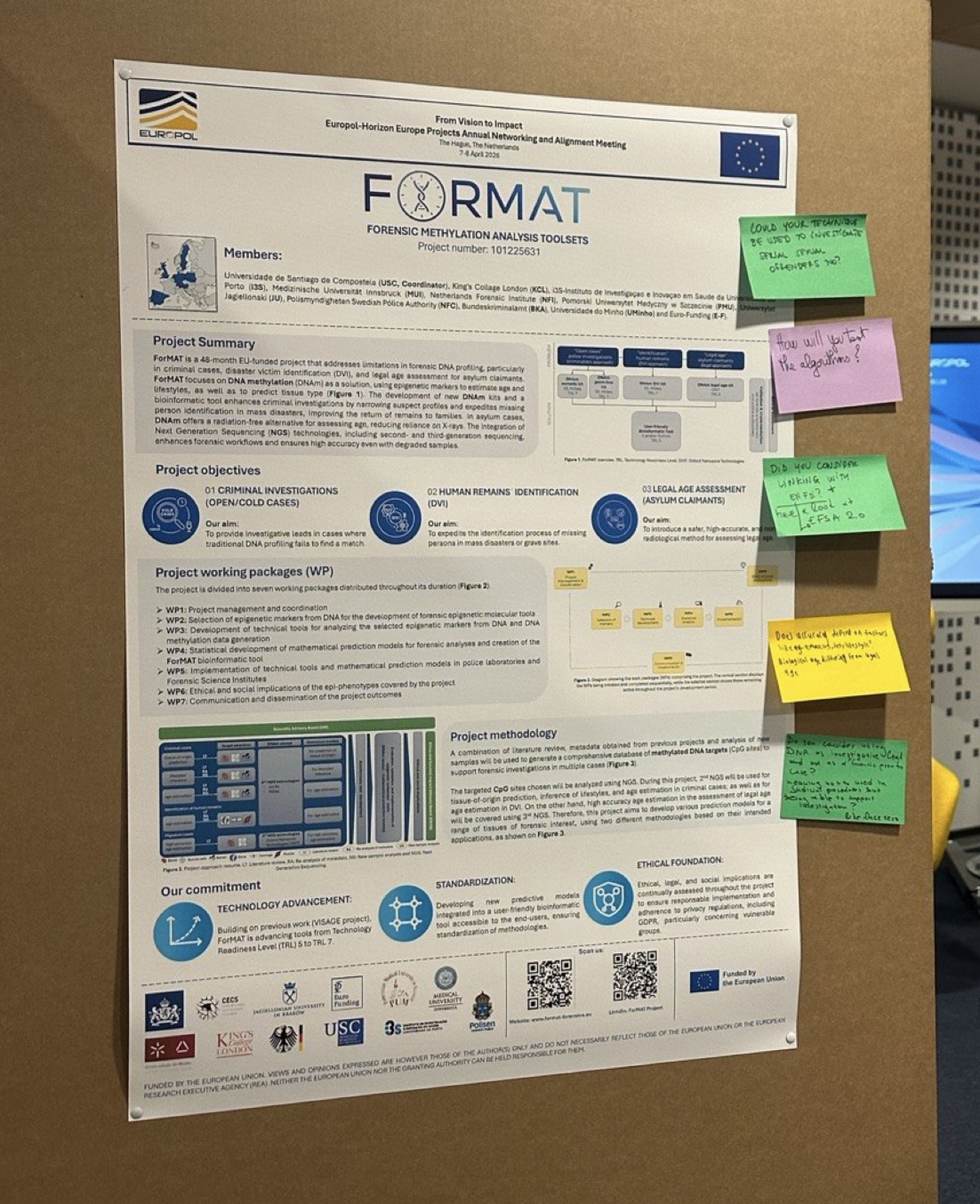
For a project like ForMAT, those questions are not abstract. ForMAT — Forensic Methylation Analysis Toolsets — is a Horizon Europe project developing DNA methylation-based tools to support forensic investigations, including age estimation from biological samples. Forensic tools, however powerful, do not operate in a vacuum. Indeed, they are used within legal systems, interpreted by human actors, and applied to real people. Their circumstances are shaped by the very inequalities the documentary explores. Understanding that context is not a side note to the science: it is part of doing the science responsibly.
Dissemination that goes beyond the conference room
Events like this one reflect a broader commitment within ForMAT to dissemination that is genuinely educational rather than purely promotional. Instead of simply presenting results to an already-converted academic audience, the UMinho team took ForMAT’s themes into a teaching environment. As a result, they reached the next generation of researchers and practitioners in criminology and social sciences.
This kind of activity matters. Students who engage critically with the social dimensions of forensic science are better equipped to ask the right questions later. This applies whether they end up working in research, policy, law enforcement, or civil society.
A collaborative effort
The event brought together the CECS research team and Euro-Funding, ForMAT’s communication partner. Moreover, the team distributed ForMAT project materials, including branded flyers, during the session. This helped participants connect the activity back to the broader research initiative and follow its progress.
Rafaela Granja led the session and is a key member of the UMinho team within ForMAT. Her work sits at the intersection of criminology, social justice, and forensic science. This makes her ideally placed to facilitate exactly this kind of critical, interdisciplinary conversation.
What comes next
This Open Class is one of several dissemination and capacity-building activities planned across ForMAT’s partner institutions. Furthermore, as the project advances, expect more events, publications, and educational initiatives that bring the science and its social context into dialogue.
You can follow ForMAT’s progress on LinkedIn and on this website.